It’s midnight, and you just realized that the shirt you want to wear tomorrow is somewhere near the bottom of the hamper, folded into a state of deep regret. You need to be up and out the door in six hours, and you have about four minutes of motivation to rescue it. The real question is which tool you end up using.
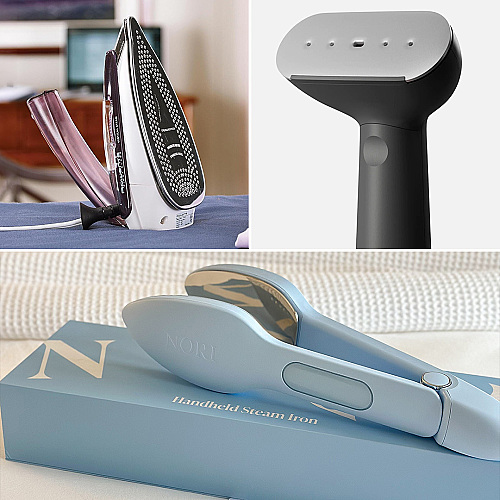
Three compact devices promise the same tidy outcome, and they could hardly go about it more differently. One is happiest on a flat surface. One wants your spare hand to hold the cloth taut. One asks for neither. Knowing what each demands before you buy saves you a drawer full of buyer’s remorse later.
So here’s the honest, side-by-side view of the Rowenta DA1560, the Steamery Cirrus 3, and the Nori Press. Each one goes up against the six things that decide which earns a place in your routine.
Pressed or Just Refreshed
Steamery Cirrus 3
Start with the basic job. Do you want a true press or simply fewer wrinkles?
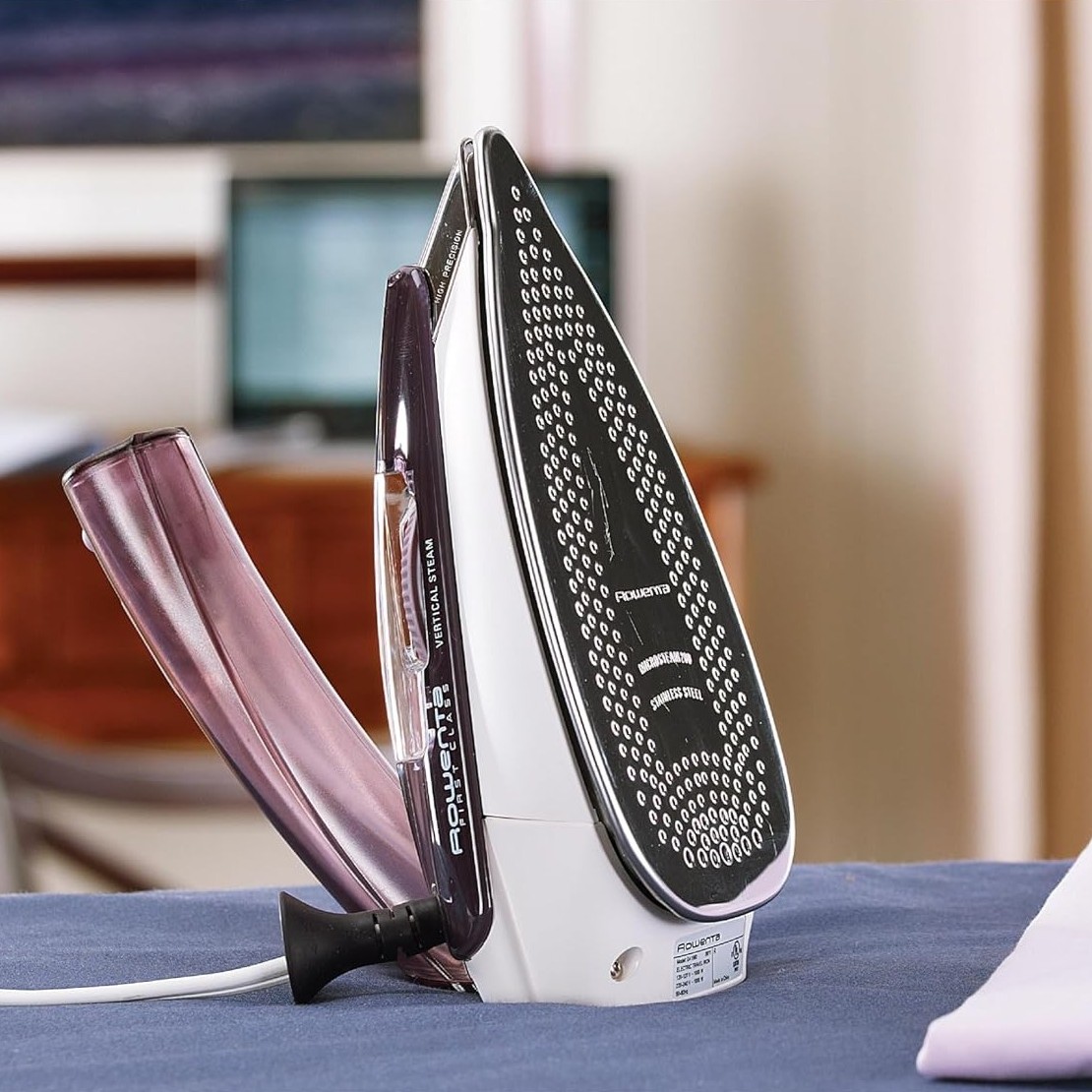
The Rowenta is a real iron. Its stainless soleplate drives heat and weight straight onto the cloth, so seams turn flat and sharp. It can hit stubborn wrinkles on a hanging garment with a burst of vertical steam, too. The trade-off on the main event is that it wants a firm base underneath, which usually means a board or a towel-padded counter.
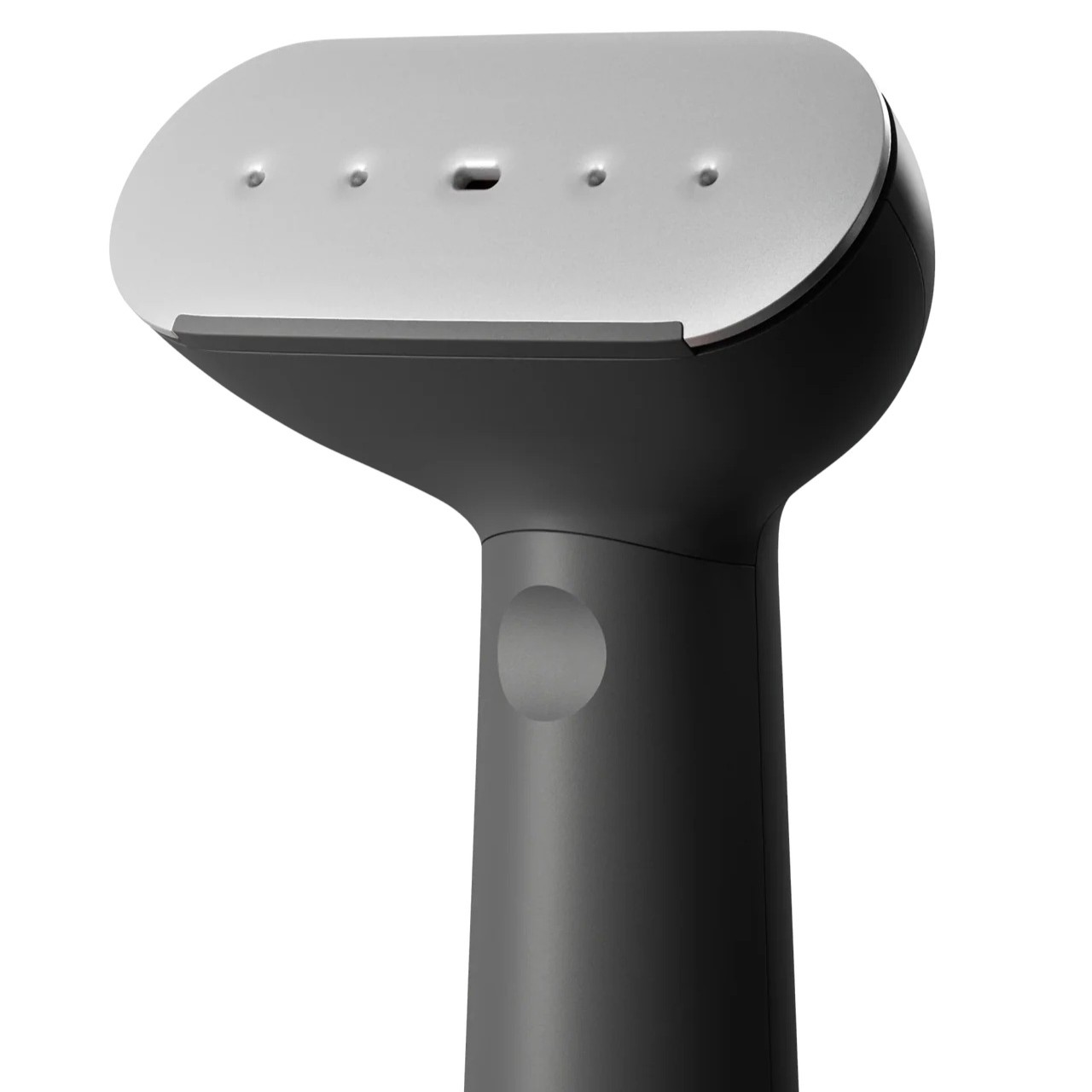
The Steamery Cirrus 3 takes a gentler path. Dry vapour paired with a heated front plate loosens the fibres, leaving garments freshened rather than crisply finished. In a hands-on review, it struggled to lift the finer creases out of linen.
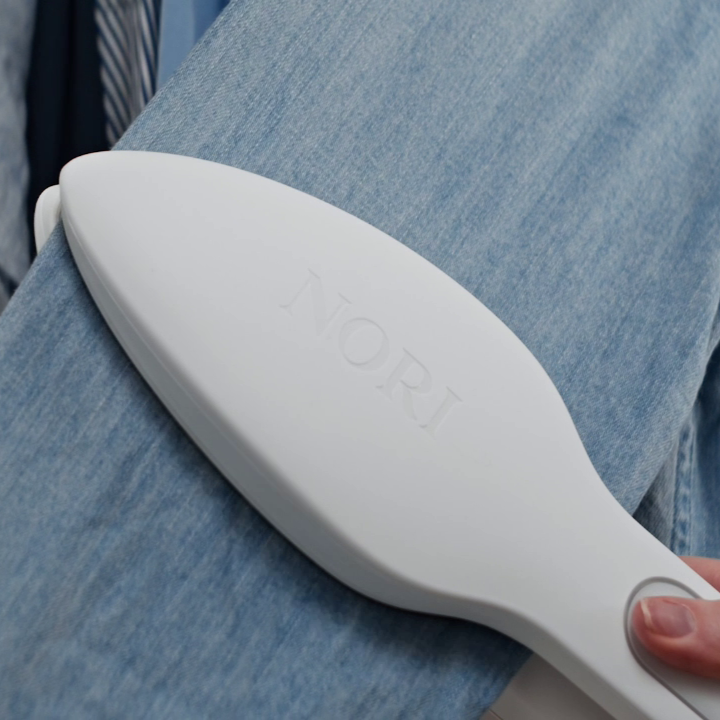
The Nori Press belongs on the pressing side, minus the setup. Two hot plates clamp over the fabric and smooth both faces in one motion, no surface needed.
Choosing the Right Heat
Now for the part that saves or ruins a garment. How does each tool decide how hot to run?
The Rowenta hands you a dial with three dot-marked settings that lump the five fabric types listed on it into broad groups. You match the cloth to the nearest dot and hope the group runs true to your specific blouse.
The Steamery Cirrus 3 removes the decision. It holds one fixed temperature, close to the lowest rung of a traditional iron, so fragile pieces stay safe while sturdier ones take longer.
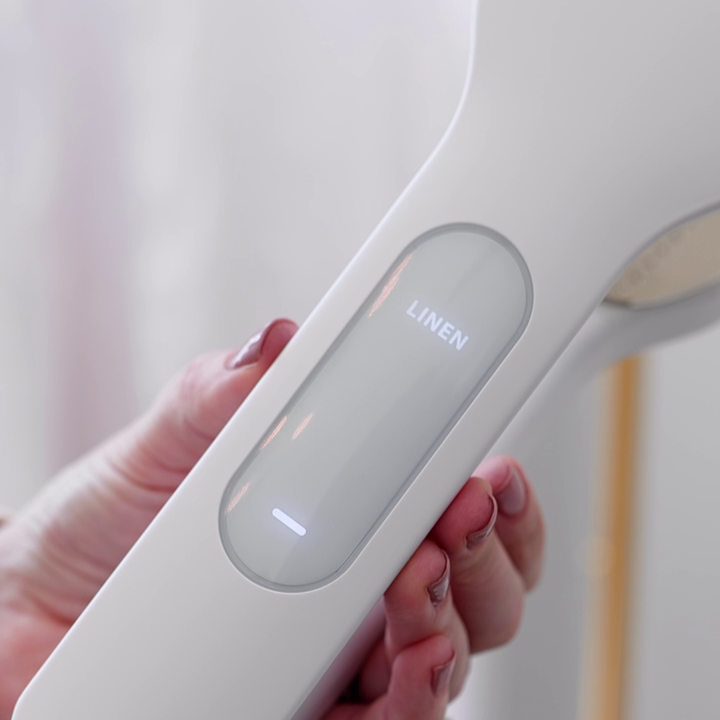
The Nori Press splits the difference in your favor. Six fabric-specific settings, labelled polyester, silk, wool, cotton, denim, and linen, let you pick by name rather than by group. You choose the cloth, and the device sorts the rest. That’s a small relief the first time you press something you care about.
Reaching Collars and Cuffs
Collars, cuffs, and the plackets down a button front are where quick jobs go to die. Reach and shape decide how cleanly a tool handles them.
The Rowenta arrives with a precision tip built for narrow seams and edges. It works well, as long as the garment lies flat on something first.
The Steamery Cirrus 3 leans on a broad heated face, better suited to open panels than to fiddly corners. The included steaming pad exists precisely because those tight spots ask you to pin the cloth with your other hand.
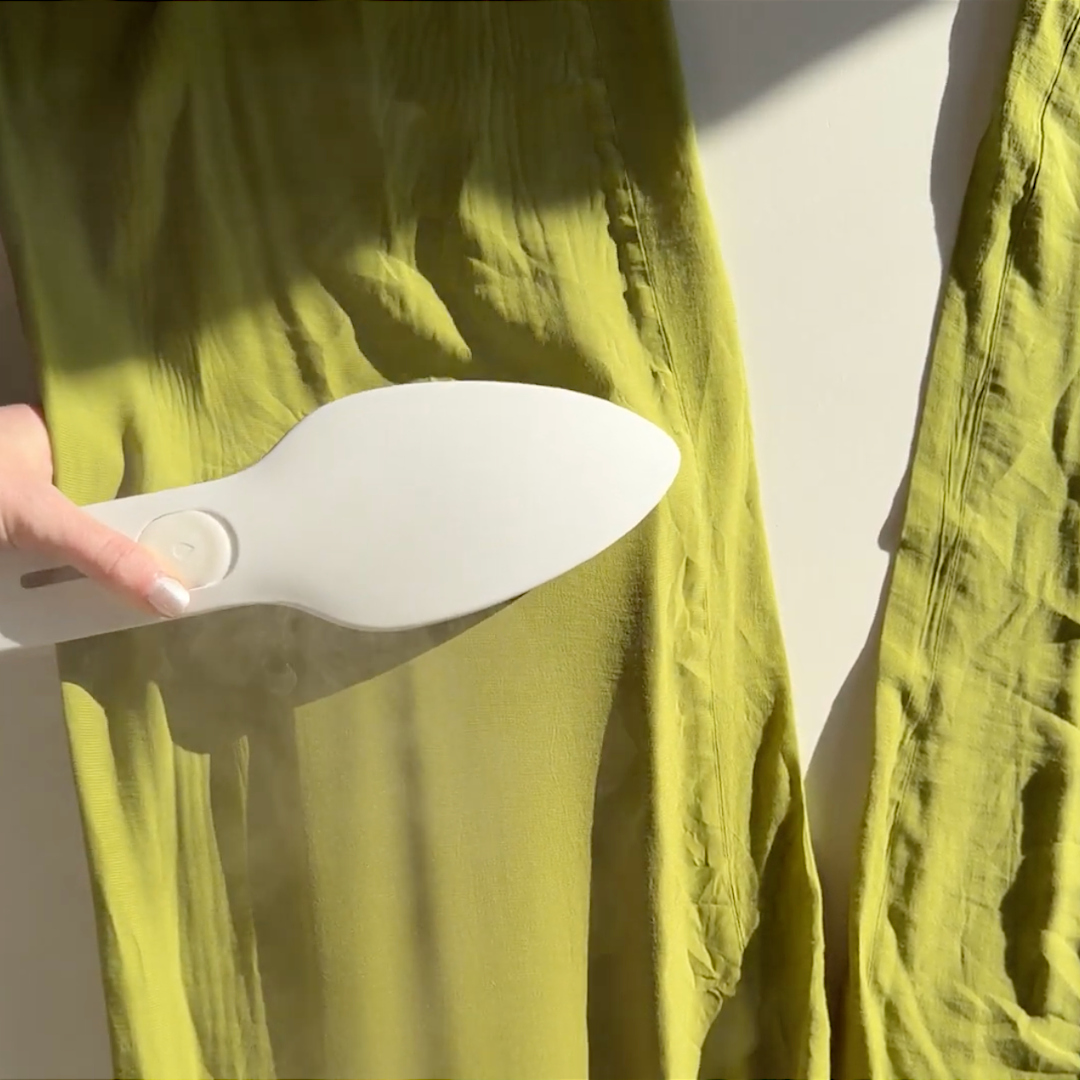
The Nori Press stretches 14 inches on elongated arms, so it slides toward the middle of a shirt without bunching the rest. Because it grips from both sides at once, a collar or cuff lands clean in one pass with no repositioning or juggling.
One Pass or Two
Here’s where the minutes stack up. How many passes does one shirt really take?
The Rowenta handles one side of a garment at a time. You press it, flip it over, and do the reverse, which doubles the work and the fuss.
The Steamery Cirrus 3 also manages a single face per go. The piece hangs while you rotate it, refreshing each section in turn.
The Nori Press is the outlier. Two heated plates close on both faces at once, so one glide finishes the whole top and roughly halves what the others demand. For anyone smoothing a couple of things before heading out, that’s the entire appeal.
Walking Away Without Worry
Rowenta DA1560
Everyone has done the mid-morning panic, halfway to work, suddenly unsure whether the flat iron, the space heater, or the countertop gadget is still glowing at home. A pressing tool belongs to that same category of things you can’t fully relax around.
The Rowenta DA1560 has no automatic shut-off. Rowenta’s user manual confirms it stays hot until unplugged, which leaves the job to your memory.
The Steamery Cirrus 3 powers down by itself after half an hour of stillness. That’s a reasonable safety net, if a patient one.
The Nori Press cuts that window shortest of the three. Built-in tilt sensors switch it off after 10 minutes without movement, so a forgotten device takes care of the rest while you’re already out the door.
The Real Starting Cost
Price is where the ranking looks upside down. Let’s be straight about it.
The Rowenta is far and away the cheapest, landing around $40. The Steamery Cirrus 3 is the splurge at $180, and it does warm up fastest, ready in about 25 seconds against the roughly two minutes the Rowenta needs and the three minutes the Nori Press asks for.
Here’s the catch on the low end, though. The soleplate iron still needs a flat, heat-safe surface, which means the ironing board comes out before every session and goes back after. That’s a tax you pay twice each time. The Nori Press at $119 sits in the middle on paper, yet it’s the only one of the trio that asks for nothing else to do its job.
The Everyday Pick
So, which one do you reach for on an ordinary Tuesday? The answer comes down less to power than to friction.
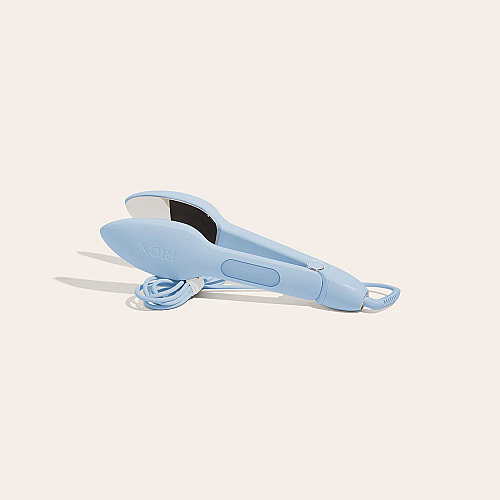
Line the six criteria up, and the pattern is hard to miss. The Rowenta presses well but leans on a board for a real press and never switches itself off. The Steamery Cirrus 3 is quick to warm and pleasant to hold, yet it refreshes more than it truly flattens. The Nori Press is the one that lands the everyday details, both sides in a pass, a heat setting chosen by fabric, and nothing extra to drag out first.
Here’s the full picture at a glance. Scan the rows for the trade-offs that matter to your mornings.
Rowenta DA1560 | Steamery Cirrus 3 | Nori Press | |
|---|---|---|---|
Pressing Style | True press on a surface; light steam refresh | Steams and refreshes | Presses both sides, no board |
Heat Control | Three-setting dial | One fixed temperature | Six fabric settings |
Detail Reach | Precision tip, on a surface | Wide face, pad for edges | 14-inch arms, clamps detail |
Sides per Pass | One, then flip | One, then rotate | Both at once |
Auto Shut-off | None | 30 minutes | 10 minutes |
Warm-up | About two minutes | About 25 seconds | About three minutes |
Price | Around $40 | $180 | $119 |
All product details, pricing, and availability were verified at the time of publication and may change without notice.




Leave a Comment
Your email address will not be published. Required fields are marked *