
I used to block off an entire Sunday afternoon every three weeks for the same ritual: root touch-up, processing time, rinse, condition, and pray the color would last longer this time. It never did. Within days, my vibrant red would start slipping toward something closer to dishwater. I blamed the dye. I blamed my hair. Turns out, I should have been looking at my water.
I’m a natural strawberry blonde, but I’ve been boosting the red factor for at least 20 years. As the gray started creeping in, those roots became impossible to ignore. If you color your hair red, you already know red hair color fading is practically a given.
Red pigment molecules are larger than other shades, so they can’t penetrate as deeply into the hair shaft. They sit closer to the surface and escape with every wash. What I didn’t know was that the minerals in my water could have been accelerating the fade by orders of magnitude.
When I lived in the city, my hair felt dry and tangled after every shower. My colorist suggested switching to sulfate-free shampoo and skipping a few wash days. It helped, but not enough. Then I moved to a house with a private well. Things only got worse.
When Drinkable Water Could Damage Hair
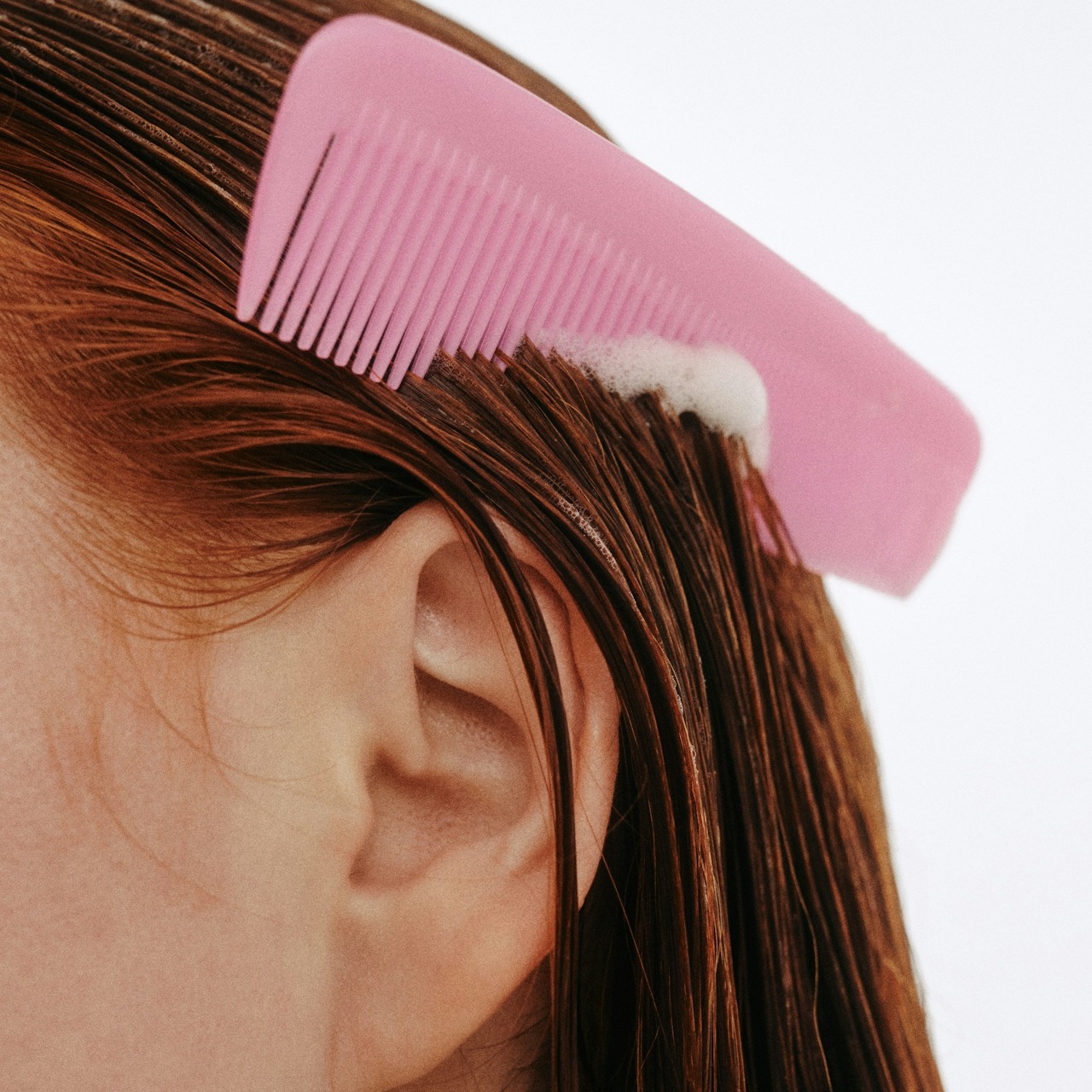
My new water was tested and cleared for contaminants. Everything came back within normal, drinkable ranges. So why was my scalp suddenly irritated? Why was my thick head of fine hair getting thinner by the wash? And why was I back in that salon chair every three weeks, watching my colorist mix another batch of dye?
Well water passes through mineral-rich underground aquifers without ever going through municipal treatment plants. Even when it’s perfectly safe to drink, the dissolved calcium, magnesium, and iron could accumulate on your hair shaft over time.
According to research published in the International Journal of Dermatology, hair washed in hard water shows higher mineral deposition, a rougher surface, and decreased thickness compared to hair washed in distilled water. A separate study in the International Journal of Trichology found that hard water significantly decreased hair strength, leading to increased breakage.
How Minerals Could Strip Color
According to the U.S. Geological Survey, 85% of the United States has hard water. Most of us may be washing our hair in mineral soup.
Not only could mineral buildup weaken your hair, but it also could directly interfere with color. When warm water deposits calcium and magnesium onto your hair, it might cause color to oxidize, turning vibrant reds dull and brassy almost immediately.
Iron in well water can tint light hair orange. Copper produces a green tint and makes color developers behave unpredictably. For anyone dealing with red hair color fading, mineral buildup might be accelerating the problem before shampoo even enters the picture.
I tried everything: color-safe shampoos, plant-based at-home dyes, cold water rinses, clarifying treatments. None of it addressed the actual problem.
The Filtered Showerhead That Changed Everything
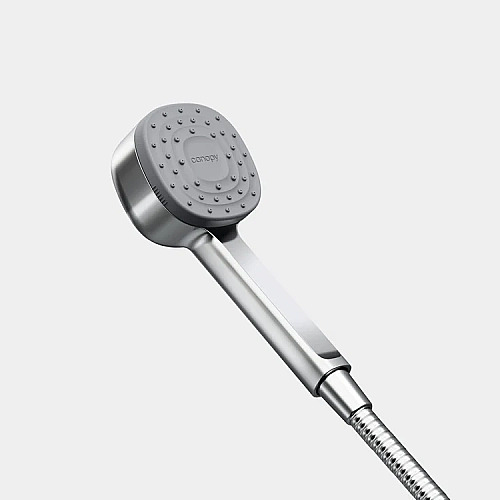
I installed the Canopy Handheld Filtered Showerhead in October. Within two weeks, I noticed my hair felt softer and less tangled. By week four, I realized I hadn’t scheduled my usual color appointment. By week eight, my roots were growing in, sure, but the color along my length still looked like new, not like something that had been through the wash 30 times.
The showerhead uses a tri-media filtration system:
Activated carbon is crafted from coconut shell fiber; reduces chlorine and other contaminants
Copper-zinc media chemically reduces contaminants in the water
Calcium sulfite reduces chlorine by trapping suspended particles in the water as they pass through
The system is tested to ANSI/NSF-177 standards, with filtering media that is known to reduce chlorine, contaminants, and other impurities from tap water.
Nearly Double the Time Between Appointments
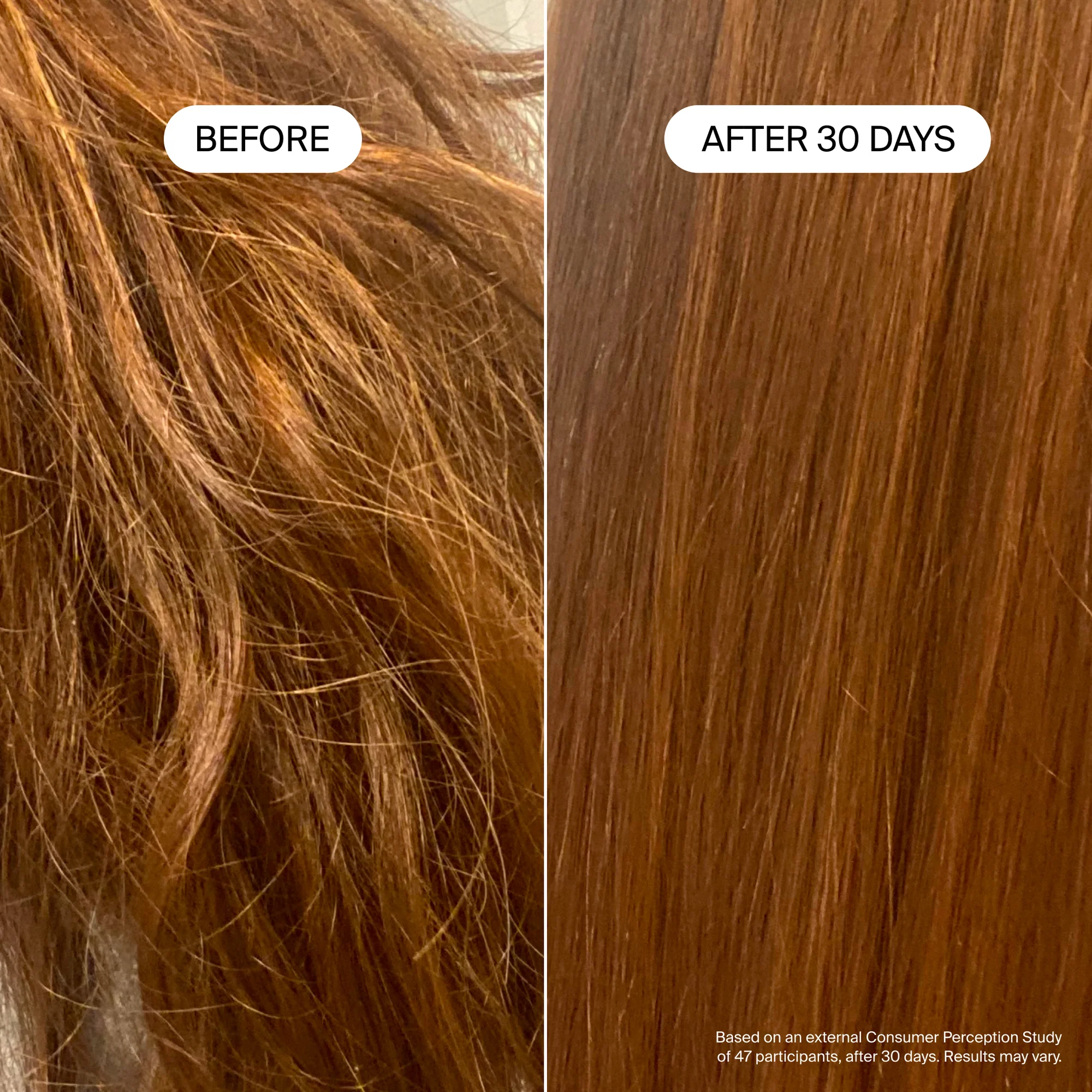
I’m now going seven to eight weeks between color appointments. Nearly double. Same color formula I’ve used for years, same shampoo routine, same everything except the water. The difference is that stark!
According to Canopy’s consumer study data, I’m not alone:
96% of users saw a reduction in hair product buildup*
91% noticed less dryness and breakage*
87% noticed a reduction in dry skin*
If red hair color fading has you booking salon visits every few weeks, those numbers explain why filtered water made such a difference for me. My hair is also just easier to manage. I have a lot of fine hair that tangles into impossible knots. The mineral buildup could have been making that worse by roughening the hair cuticle. Filtered water smooths things out again.
Handheld vs. Fixed Mount
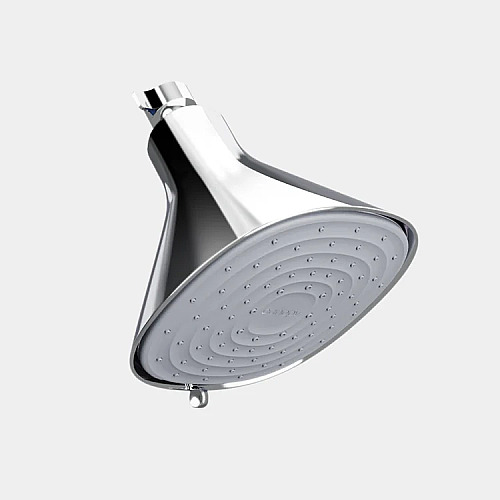
Canopy makes both a fixed-mount and a handheld version. I chose the handheld, and I found it really helped with rinsing dye residue, shampoo, and those deep conditioning treatments that tend to get stuck in my hair.
The handheld version also comes with a long metal hose and a scalp massager faceplate. I wasn’t sure about the faceplate at first, thinking it might make my tangles worse. Turns out, it feels fantastic and actually helps work product off of your scalp without using your nails.
Price, Installation, and Warranty
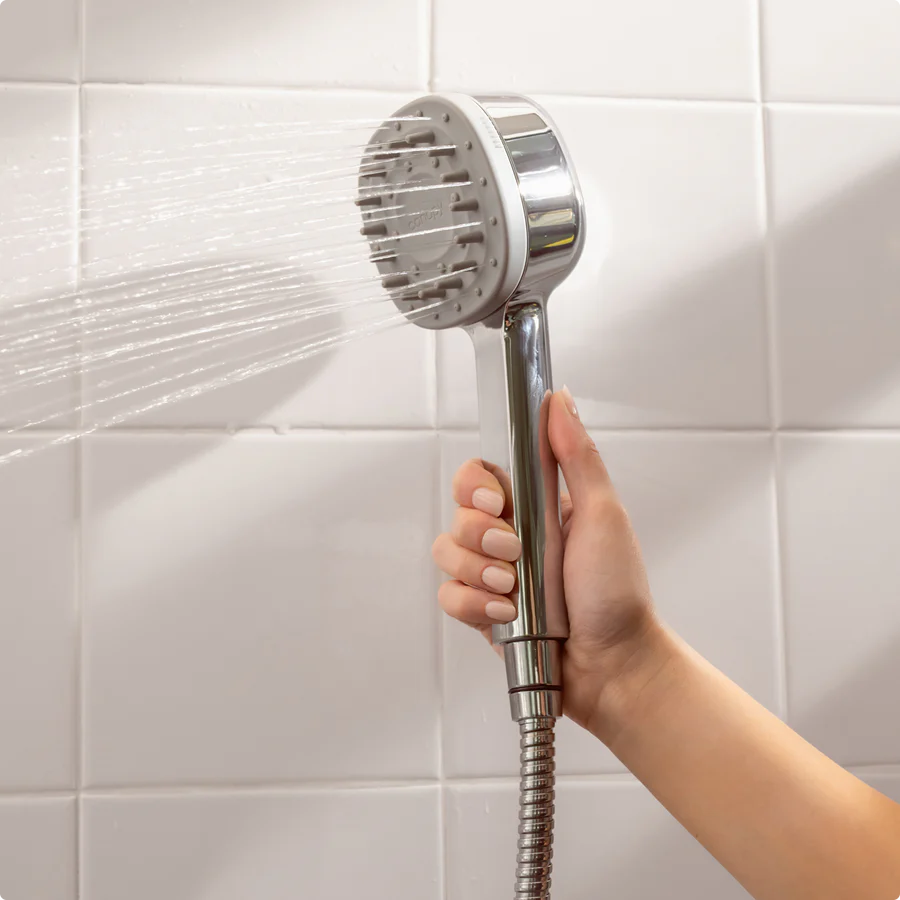
Price: $150 for a one-time purchase or $135 if you subscribe to filter replacements (shipped every 90 days). You can also do $125 with a filter and aroma subscription.
Finishes: Polished Chrome, Matte Black, Brushed Nickel, Brass. I went with Brushed Nickel because it matched the rest of my bathroom.
Installation: Took about 5 minutes. You unscrew your old showerhead, attach the mount and hose, then screw on the filtered showerhead.
Risk reversal: Canopy offers a 60-day money-back guarantee (minus a small handling fee) and a one-year warranty.
I’ve tried cheaper filtered showerheads before, the kind you find on Amazon for $30. This isn’t that. The Canopy Handheld Filtered Showerhead feels substantial, well-made, and built to last. Even the packaging feels premium, which might sound superficial, but when you’re spending $150 on a showerhead, the presentation matters. It signals that the company takes its product seriously.
What Changed
I’m not spending every third Sunday in my bathroom anymore. I’m not panicking when I look in the mirror under fluorescent lights. My hair feels like hair again instead of straw held together by hope and leave-in conditioner.
Will a filtered showerhead solve every hair problem? No. But if you’re fighting red hair color fading, breakage, or scalp irritation and you have hard water (which, statistically, you probably do), the problem might not be your hair or your products. It might be what’s coming out of the pipe.
Tired of retouching your red every three weeks?
*Based on an external Consumer Perception Study of 47 participants, after 30 days. Results may vary.



Leave a Comment
Your email address will not be published. Required fields are marked *